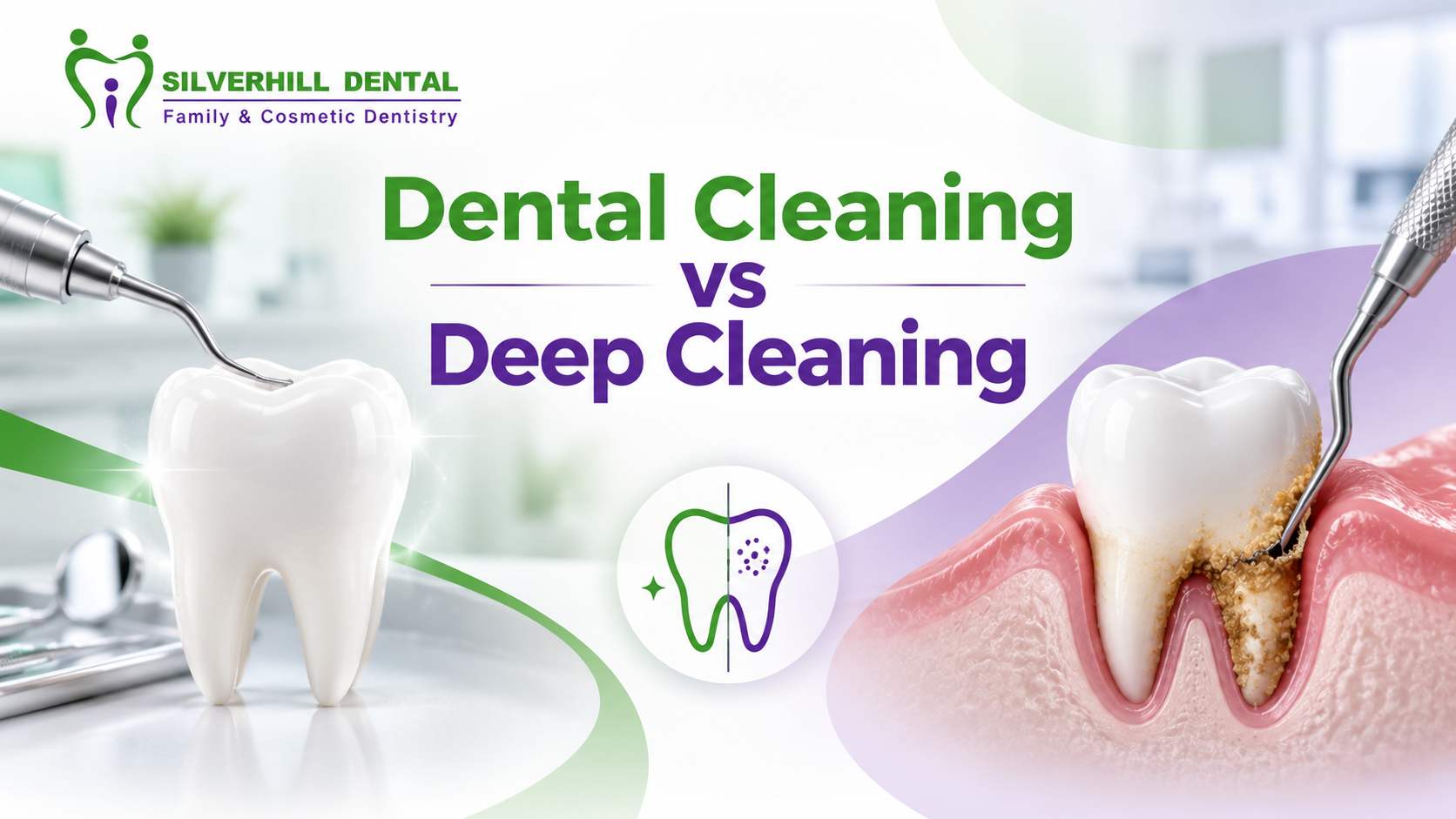
Regular dental cleanings and deep cleanings both involve removing plaque and tartar, but they are not the same procedure. A routine dental cleaning is generally part of preventive dental care, while a deep cleaning—often called scaling and root planing—is used to treat gum disease when bacteria and tartar have accumulated below the gumline.
The right treatment depends on the condition of your teeth and gums. A dentist may evaluate your gums, measure periodontal pockets, look for bleeding or inflammation, and review dental X-rays when necessary before recommending deep cleaning.
What Is a Regular Cleaning?
A regular dental cleaning, also called a professional dental cleaning or prophylaxis, is primarily designed to maintain oral health and prevent problems such as tooth decay and gum disease.
What Happens During a Regular Dental Cleaning?
During a routine cleaning, a dental professional removes plaque and tartar from the accessible surfaces of your teeth, including areas that can be difficult to clean effectively at home.
The cleaning may include:
- Removing plaque and tartar buildup
- Cleaning around the gumline
- Polishing the teeth
- Reviewing your brushing and flossing habits
- Checking the gums and teeth for signs of oral health problems
Tartar is hardened plaque that cannot be completely removed with a toothbrush or floss. Professional cleaning is necessary to remove these hardened deposits.
A routine cleaning is generally appropriate when the gums and supporting structures around the teeth are relatively healthy or when there is no indication that periodontal therapy is needed.
If you are due for a routine appointment, you can learn more about dental cleaning in Etobicoke and what to expect during a professional cleaning and checkup.
Is a Regular Cleaning the Same as Scaling?
The word “scaling” can sometimes cause confusion because professional cleaning may involve scaling instruments to remove tartar.
However, routine scaling above the gumline is different from scaling and root planing. Scaling and root planing is a therapeutic procedure that cleans below the gumline and along the tooth roots to treat periodontal disease.
What Is a Deep Cleaning?
A deep cleaning is a periodontal treatment used when gum disease has progressed beyond simple inflammation and bacteria and tartar have accumulated below the gumline.
The clinical term commonly used for deep cleaning is scaling and root planing (SRP).
What Does Scaling and Root Planing Involve?
Scaling removes plaque and tartar from the tooth surfaces, including areas below the gumline. Root planing focuses on the root surfaces, smoothing areas where bacterial deposits and toxins can accumulate.
The goal is to reduce the bacterial burden in periodontal pockets and create a cleaner root surface that allows the gum tissue to heal.
Why Is Deep Cleaning Used for Gum Disease?
When gum disease causes the gums to pull away from the teeth, spaces called periodontal pockets can develop. These pockets can make it difficult to remove bacteria with normal brushing and flossing.
If periodontal disease is present, scaling and root planing may be recommended as an initial nonsurgical treatment.
Deep cleaning is therefore not simply a stronger version of a regular cleaning. It is a treatment intended to address disease below the gumline.
Key Differences Between Regular Cleaning and Deep Cleaning
The main difference between the two procedures is why they are performed and where the cleaning takes place.
| Feature | Regular Cleaning | Deep Cleaning |
|---|---|---|
| Main purpose | Preventive oral care | Treatment of periodontal disease |
| Common term | Dental cleaning / prophylaxis | Scaling and root planing |
| Main treatment area | Accessible tooth surfaces and gumline | Below the gumline and tooth roots |
| Treats periodontal pockets | Not typically | Yes |
| Removes tartar | Yes | Yes, including deposits below the gumline |
| Local anesthetic | Usually not needed | May be used |
| Number of visits | Often one routine visit | May require multiple visits |
| Follow-up | Routine dental schedule | Periodontal reassessment and maintenance may be needed |
Preventive Cleaning vs. Periodontal Treatment
A regular cleaning is generally preventive. Deep cleaning is therapeutic and is used when periodontal disease requires treatment.
Above-the-Gumline vs. Below-the-Gumline Cleaning
Routine cleanings primarily address plaque and tartar on accessible tooth surfaces. Scaling and root planing involves cleaning below the gumline and treating the tooth root surfaces.
Healthy Gums vs. Periodontal Pockets
Patients with generally healthy gums may only need routine professional cleanings. Deeper periodontal pockets, inflammation, bleeding, attachment loss, or other signs of periodontal disease may indicate the need for periodontal treatment.
Comfort, Time, and Follow-Up
A regular cleaning is usually a simpler preventive appointment. Scaling and root planing can be more involved and may require local anesthetic, depending on the areas being treated and the patient’s needs. It can also require more than one appointment.
Who May Need Periodontal Therapy?
Not everyone who has plaque, tartar, or occasional gum bleeding needs a deep cleaning. The decision should be based on a clinical evaluation rather than the amount of tartar alone.
Signs That May Indicate Gum Disease

Possible signs of periodontal disease include:
- Gums that bleed regularly
- Red, swollen, or tender gums
- Persistent bad breath
- Gum recession
- Loose or shifting teeth
- Changes in how teeth fit together
- Deep periodontal pockets
- Evidence of bone or attachment loss
Some people with gum disease may have few noticeable symptoms, which is why periodontal evaluation can be important when risk factors or clinical findings are present.
How Dentists Determine Whether You Need Deep Cleaning
Your dentist may assess the health of your gums by examining the gum tissue and measuring periodontal pocket depths. Dental X-rays may also be used when appropriate to evaluate supporting bone and other structures.
The recommendation for scaling and root planing should be based on the presence and severity of periodontal disease—not simply because a routine cleaning has been delayed or because there is a large amount of visible tartar.
Can Gingivitis Be Treated Without Deep Cleaning?
Early gum inflammation caused by plaque buildup can often improve with professional cleaning and consistent daily oral hygiene.
However, when periodontal disease has progressed and involves deeper pockets or damage to the supporting structures, more extensive periodontal treatment may be necessary.
Does Deep Cleaning Take More Than One Visit?
It can. The number of appointments depends on how many areas require treatment, the extent of periodontal disease, and the treatment approach recommended by the dental professional.
The recommendation for scaling and root planing should be based on the presence and severity of periodontal disease—not simply because a routine cleaning has been delayed or because there is a large amount of visible tartar.
Why Scaling and Root Planing May Be Divided Into Several Visits
Because scaling and root planing involves cleaning beneath the gumline and along root surfaces, a dentist or periodontist may divide treatment into multiple appointments, particularly when several areas of the mouth need treatment.
What Can You Expect After Deep Cleaning?

Some patients experience temporary gum tenderness, sensitivity, swelling, or minor bleeding after scaling and root planing. Tooth sensitivity can also occur for several days after treatment.
Your dentist may schedule a follow-up appointment to evaluate how your gums have responded to treatment and determine whether additional periodontal care or ongoing maintenance is needed.
What Happens After Periodontal Treatment?
Scaling and root planing is not a substitute for daily oral hygiene. Brushing, cleaning between the teeth, and following your dentist’s recommended maintenance schedule are important for controlling plaque and reducing the risk of recurrent periodontal problems.
Dental Cleaning vs Deep Cleaning: Which One Do You Need?
The answer depends on the condition of your gums and supporting tissues.
If your gums are generally healthy and there are no findings suggesting periodontal disease, a regular professional cleaning may be appropriate. If your dentist identifies periodontal pockets, significant inflammation, attachment loss, or other evidence of periodontal disease, scaling and root planing may be recommended instead.
A clinical exam is needed to determine the right type of cleaning. A dentist can evaluate your gum health and recommend the appropriate treatment rather than relying on symptoms or tartar buildup alone.
Approved by Dr. Laleh Rahmani
Frequently Asked Question
No. A regular cleaning is primarily preventive and generally focuses on removing plaque and tartar from accessible tooth surfaces. Deep cleaning, or scaling and root planing, is a periodontal treatment that cleans below the gumline and along tooth roots.
Not necessarily. A large amount of tartar does not automatically mean that scaling and root planing is required. The need for periodontal therapy depends on the condition of the gums and supporting tissues and should be determined through a clinical evaluation.
Scaling and root planing can cause some discomfort or sensitivity afterward. Depending on the treatment area and individual needs, local anesthetic may be used during the procedure.
There is no single treatment time for every patient. It depends on the number of teeth and areas requiring treatment, the severity of periodontal disease, and whether treatment is divided into multiple appointments.
Many patients require ongoing periodontal maintenance after treatment rather than immediately returning to a standard preventive-cleaning schedule. The appropriate interval and type of follow-up care depend on how the gums respond and whether periodontal disease remains active.
Not necessarily, but the absence of pain does not rule out gum disease. Periodontal disease can sometimes progress with few noticeable symptoms. A dental examination can identify problems that may not be obvious at home.