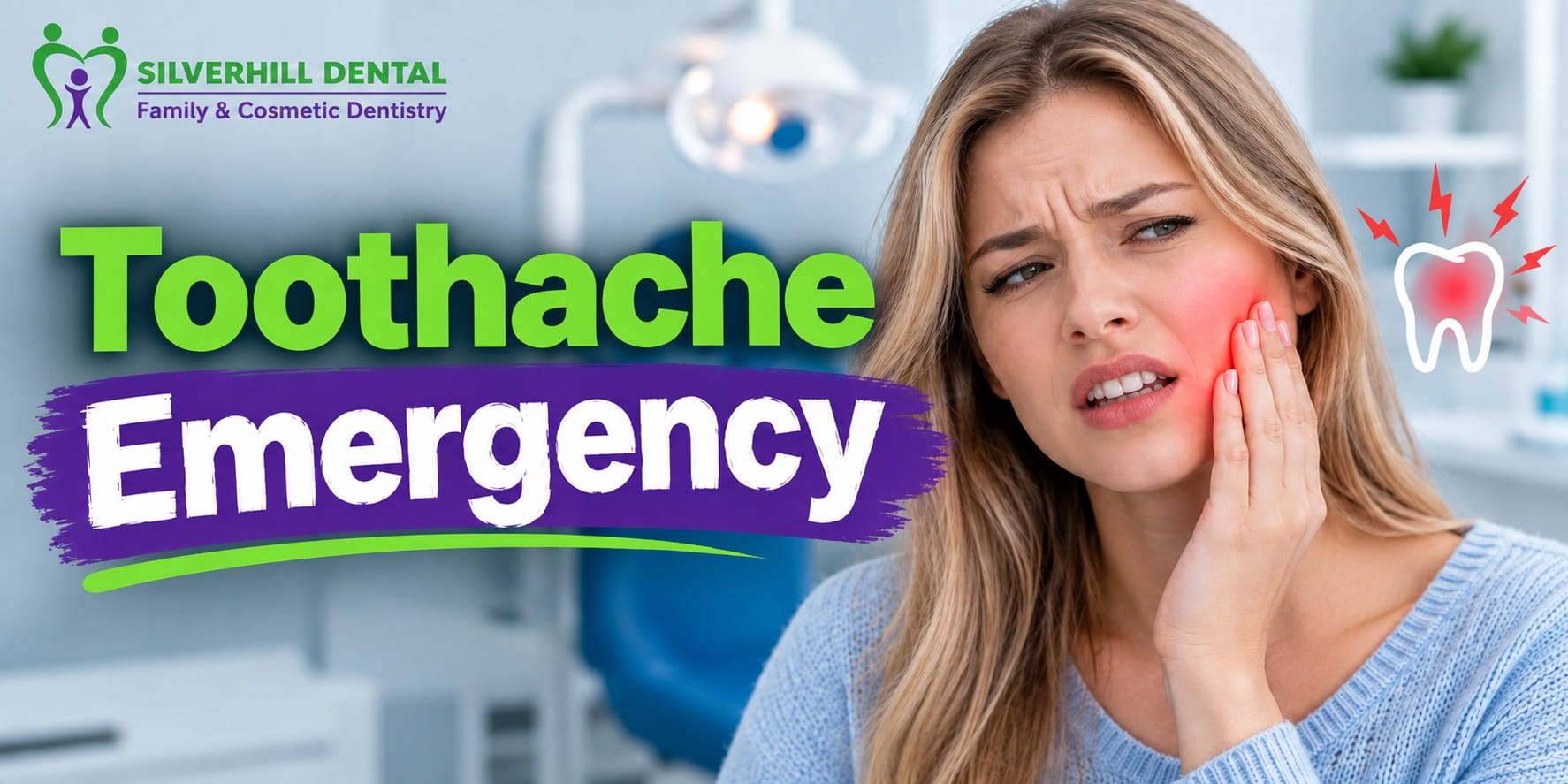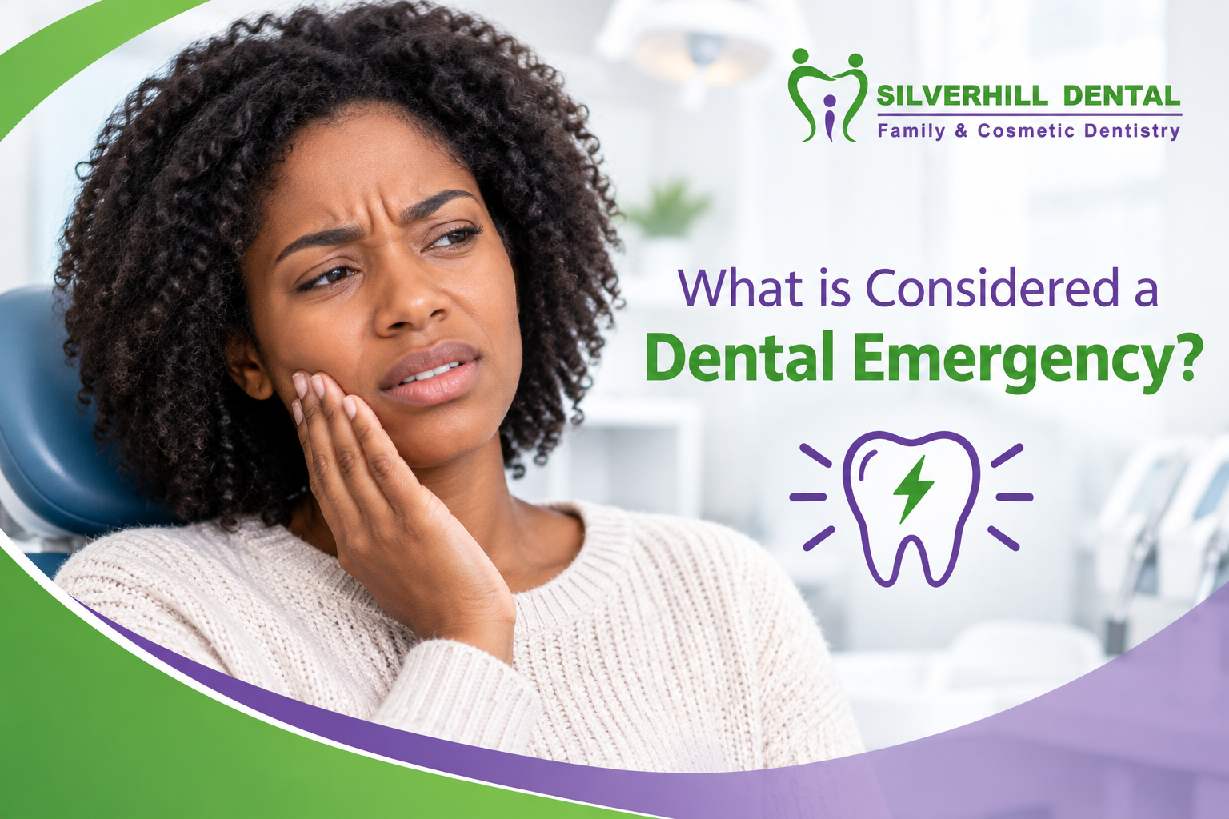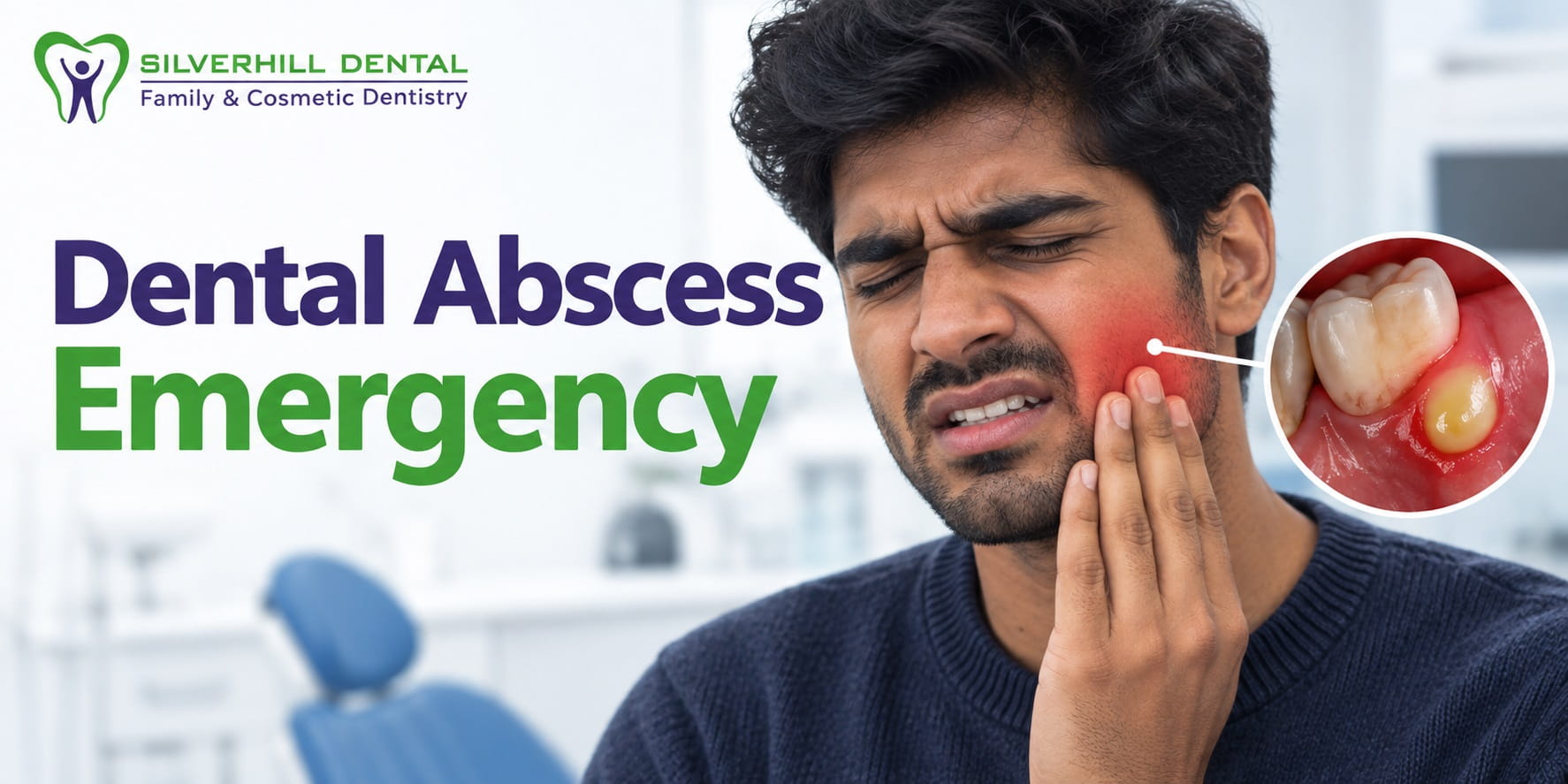
A dental abscess is a painful infection that causes a pocket of pus around a tooth or in the gums. It can cause severe toothache, swelling, fever, a bad taste in the mouth, or difficulty opening your mouth.
A dental abscess needs prompt dental treatment and usually will not go away on its own. If swelling spreads to your face or neck, or you have difficulty breathing or swallowing, seek emergency medical care immediately.
What Is a Dental Abscess
A dental abscess is a pocket of pus that is caused by a bacterial infection, whether in or around one of your teeth. It is a condition that can develop if you do not treat your tooth decay, or a cracked or damaged tooth, or even a gum disease.
Its common symptoms are:
- Severe toothache
- Gum or facial swelling
- Unusual sensitivity
- Pain when biting or chewing
- A bad taste in your mouth
- Fever
And the most important reason a dental abscess requires prompt treatment is because the infection can spread into surrounding tissues.
A serious infection might include these symptoms:
- Difficulty breathing or swallowing
- Significant facial or neck swelling
- Swelling around the eye
These symptoms are not to be ignored, and if you have any of these, you require immediate medical attention.
Symptoms That Need Prompt Care
Contact your dentist as fast as possible if you are experiencing any of the following symptoms:
- Severe or persistent toothache
- Pain when biting or chewing
- An unusual sensitivity to hot or cold food
- Gums having become red, swollen, or tender
- A bad and awful taste, foul odor, or pus in your mouth
- Dental facial swelling around the tooth, jaw, cheek, or your neck
- Fever, or swollen lymph nodes
- Difficulty opening your mouth
- Swelling around your eye or changes in your vision.
If the swelling makes it difficult for you to breathe, swallow, or speak, you should seek emergency medical care. Significant facial or neck swelling can indicate that the infection is spreading, and it may require immediate examination and treatment.

When Is It an Emergency?
A dental abscess should be treated promptly since the infection will not go away and clear on its own.
A dental abscess emergency becomes really concerning if the swelling begins to spread into the face, jaw, or your neck. If you have difficulty opening your mouth, then this can also be another sign of the infection worsening and becoming more serious.
A tooth abscess emergency requires immediate medical attention if you have any of the symptoms mentioned previously.
These symptoms can indicate that the infection has spread beyond the affected tooth and surrounding tissues.
Even if you do not have these severe symptoms, you should not ignore an abscess. It is a dental emergency when prompt treatment is needed to:
- Control pain
- Drain the infection
- Prevent the infection from spreading
If you suspect you have an abscess, then we recommend calling your dentist and booking an appointment as soon as possible for a dental examination since a dental abscess is not a joking matter.
Get in Touch with Silverhill Dental!
What Not to Do
If you think you have a dental abscess, then you should avoid these common mistakes:
- Do not squeeze, pop, or puncture the abscess. This can irritate the area and may even spread the infection.
- Do not place aspirin or painkillers directly on the gums since they can damage the gum tissue.
- Do not exceed the recommended dose of pain medication. If you take more, not only will it not provide better relief, but it also can be dangerous!
- Do not rely on antibiotics alone. Yes, you may need them in some cases, but dental treatment is mostly required to remove the source of the infection.
- Do not delay seeing a dentist, even if the pain has become less present and you feel like it has improved. This usually happens after the abscess drains, but you still need to book an appointment with your dentist immediately for an examination and treatment procedure.
Treatment Options
| Treatment | When It May Be Used | Purpose |
|---|---|---|
| Drainage | When pus has built up around the affected tooth. | Relieves pressure and helps control the infection. |
| Root Canal | When the infected tooth can still be saved. | Removes infected tissue and seals the tooth. |
| Extraction | When the tooth cannot be restored. | Removes the affected tooth and source of infection. |
| Antibiotics | When the infection has spread or causes systemic symptoms such as fever or feeling unwell. | Helps control a spreading infection but does not replace dental treatment. |
First, you’ve gotta know that the treatment for a dental abscess depends on these factors:
- Cause of the dental abscess
- Severity of the infection
- Condition of the affected tooth
Common treatment options include:
Drainage
Your dentist may drain the pus to relieve the pressure and control the infection.
Root canal
If the infected tooth can be saved, a root canal might do just that by removing the infected tissue and sealing the tooth.
Extraction
If the tooth is beyond the hopes of restoration, your dentist might go through with extraction in order to remove the source of infection.
Antibiotics
These may be prescribed by your dentist when the infection has spread and is causing systemic symptoms such as fever or is making you feel genuinely unwell. But of course, as we have mentioned before, antibiotics cannot be a complete substitute for dental treatment.
Your dentist will determine the most appropriate treatment after they are done with examining the tooth and surrounding tissues, which is why, we once again recommend that if you are seeing symptoms and signs of a dental abscess, you should call your dentist and book an appointment for a dental examination.

When to Seek Medical Emergency Care
Just to be clear, a dental abscess emergency requires immediate medical attention when the infection causes significant swelling or if it begins affecting your breathing and swallowing. If you have any of these signs, go to an emergency department:
- Severe swelling of the mouth, face, jaw, or your neck
- Difficulty breathing, swallowing, speaking, or opening your mouth
- Swelling around the eye or sudden vision problem (although it is not always necessarily a sign of a dental abscess emergency and can be a sign of many other things)
- High fever with a facial swelling that keeps getting worse
A tooth infection emergency can become life-threatening if the infection spreads beyond the mouth. In some rare cases, if a dental infection is left untreated, then it can most definitely contribute to sepsis, which is the body’s extreme response to an infection.
These all can be signs of sepsis and need immediate medical evaluation if you see any of it:
- Confusion
- Extreme weakness
- Shortness of breath
- Clammy skin
- Rapid heart rate
- Severe pain with an infection
Dental Swelling or Suspected Infection Should Be Assessed Promptly
Dental swelling or a suspected infection should be assessed promptly, even when the pain seems manageable. At Silverhill Dental, our professional and friendly team is equipped to assess urgent dental concerns and determine the appropriate treatment.
We understand that dealing with severe pain, swelling, or an infection can make an emergency dental visit stressful. Our goal is to make the experience as calm and straightforward as possible, while providing the care your situation requires.
For patients looking for a dentist in Etobicoke, Silverhill Dental offers a well-equipped environment where dental emergencies can be assessed with care and attention. We believe in our ability to help patients through unexpected dental problems and get them on the right path toward treatment and recovery.
Medically Reviewed by Dr. Laleh Rahmani
Frequently Asked Questions
No. A dental abscess will not clear up on its own and requires professional dental treatment in order to remove the source of the infection.
Even if the pain and swelling improve after an abscess drains, you still need to see a dentist. The infection can remain and it may even return or spread if you don’t undergo proper treatment.
Yes. If the tooth can be saved, root canal treatment may remove the infection while allowing you to keep the natural tooth. If the tooth cannot be restored in some cases, extraction may be necessary.
Yes. Pain may decrease if an abscess drains, but this does not mean the infection has been cured. You should still arrange a dental examination as soon as possible.
Seek immediate medical care if you have severe facial or neck swelling, difficulty breathing or swallowing, significant difficulty opening your mouth, or swelling around the eye or vision problems.
Not always. Treatment usually focuses on addressing the source of the infection, such as drainage, root canal treatment, or extraction. Antibiotics may be needed when the infection has spread or causes symptoms such as fever or if it makes you feel unwell.